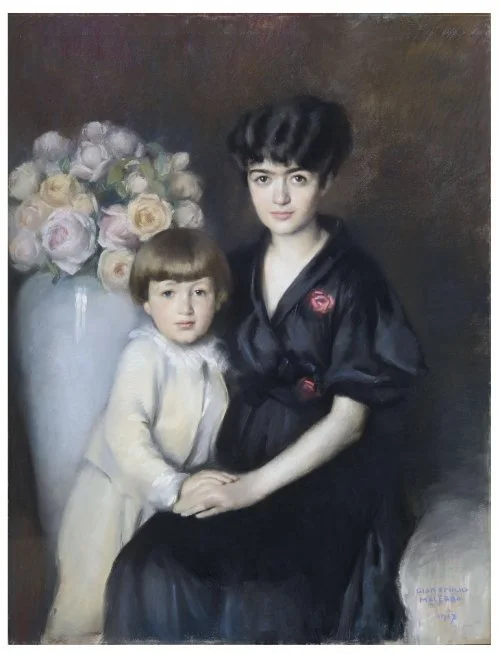
The Licia and Carlo Ludovico Ragghianti Art Study Center Foundation announces the first major monographic exhibition in modern times dedicated to Emilio Malerba (Milan, 1878-1926), a key yet under-recognized figure in the Italian art scene of the first half of the 20th century.
Held in Lucca from February 28 to June 7, 2026, in the exhibition rooms of the Ragghianti Foundation, the exhibition, titled "Emilio Malerba (1878-1926). From the Beginnings to the Italian Twentieth Century," curated by Paolo Bolpagni and Elena Pontiggia and produced in collaboration with the Malerba Archives of Monza, with the crucial support of the Fondazione Cassa di Risparmio di Lucca, will offer—through a large body of works, original posters, and documents—a comprehensive reflection on the artist's career on the centenary of his death, and nearly a century after the last retrospective dedicated to him, dating back to 1931. MORE INFO
The exhibition will trace Malerba's artistic career from his youth and his evocative Belle Époque posters to his post-Scapigliatura, Novecento, and purist work, presenting a large number of previously unpublished works, emerging from recent research, which will be exhibited for the first time at the Ragghianti Foundation.
The exhibition will be completed by works by other artists from the initial core of the "Novecento" movement—Anselmo Bucci, Leonardo Dudreville, Achille Funi, Piero Marussig, Ubaldo Oppi, and Mario Sironi—as well as a portrait of Malerba by Primo Sinopico in 1917, exploring the nuances and visions of a group that never completely conformed stylistically.
After his early work in the late Scapigliatura movement and his success in advertising graphics, Malerba developed a more solid and personal style in 1916, arriving in 1920 at the precise and suspended form that critics would later recognize as Magic Realism. In 1922, he was among the founders of the "Novecento" group, but his intense expressive exploration was abruptly interrupted by an incurable illness that struck him three years later.
Despite the brevity of his career, Malerba succeeded in developing a highly refined poetics, focused on the investigation of "truth," understood not as simple realism, but rather as the revelation of the inner dimension of figures and objects. His protagonists and his universe of small things convey an intimate, domestic, and collected world, in which an introverted and delicate sensitivity emerges beneath the mundane.